










- 主页
- 物流
Logistics Supply Chain Management
Connecting the logistics supply chain
Logistics providers are deeply integrated with their customers’ operations, often managing inventory, warehousing, and distribution. Many also rely on third-party logistics (3PL) partners to handle fulfilment and customer delivery. This level of dependency creates risks, further amplified by high document volumes, manual processes, and limited visibility. These pressures are driving new challenges across the industry.
Logistics Supply Chain Challenges
Challenge 01
High Document Volumes
Many of the documents are sector-specific such as consignment notes and customs declarations. These must be exchanged between multiple parties across the logistics supply chain, often under tight time pressures. The sheer volume and coordination required create significant operational complexity and increase the risk of delays, errors, and visibility gaps.
Challenge 02
Integrated Partner Networks
Logistics providers depend on multiple partners across transport modes, regions, and last-mile delivery networks. At the same time, customers increasingly expect direct integration with their ERP or business systems. Managing these interconnected relationships requires significant effort and coordination to stay aligned.
Challenge 03
More Documents, More Management
The volume and variety of documents increases significantly with different functions involved. Information must move accurately between 3PL providers and their customers across multiple processes. Without efficient document management, this creates visibility gaps, delays, and operational risk.
Challenge 04
Cross-border Compliance
Moving goods across borders introduces additional legal and regulatory requirements. Each shipment may require specific documentation to meet customs and market rules. If documents are incomplete or incorrect, goods can be delayed at borders, disrupting delivery schedules and putting the wider supply chain at risk.
What Good Looks Like On The Ground
Shipments move through warehouses, transport networks, and borders with the right documentation attached the first time.
Customers, carriers, and third-party partners can access the same accurate shipment, inventory, and delivery information without relying on phone calls or manual updates.
New partners and routes can be added quickly without disrupting existing operations or creating additional administrative effort.
Teams are not chasing missing paperwork, reconciling shipment discrepancies, or manually coordinating updates between systems and partners. They are focused on moving goods efficiently, maintaining delivery commitments, and keeping customers informed.
- Documents flow reliably between all parties in the network.
- Partners can be connected and operational without lengthy onboarding delays.
- The supply chain can scale across regions and partners without losing visibility or control.
Supply Chain Connections




















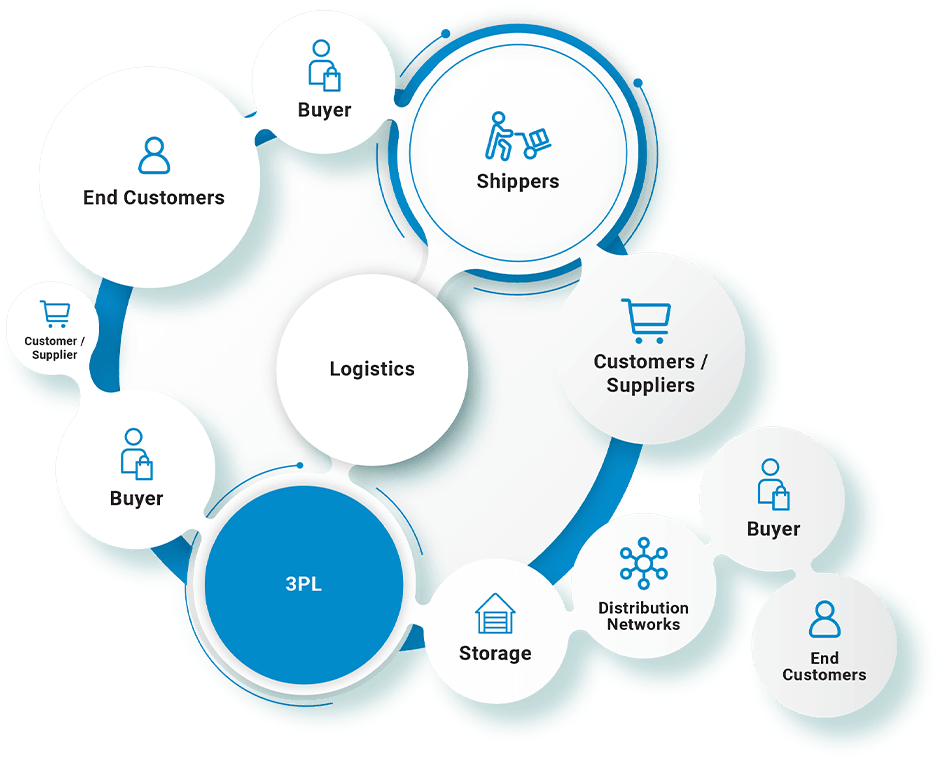
Solutions For The 物流 Industry
电子数据交换
Exchange orders, shipment documents, invoices, and status updates with automated processing that can be integrated seamlessly with internal systems and multiple trading parties.
Web EDI
Get browser-based access to documents and configurable workflows for all stakeholders and parties to view, track, and retrieve information in real time from a single interface.
How It Works
Helping Your Logistics Supply Chain Thrive
Simplified Collaboration
Distribute simultaneously to multiple parties while staying connected across several systems between customers and 3PL partners. Get updated stock levels for sales orders and automatically trigger downstream documents like ASNs and invoices.
Better Visibility and Control
Provide real-time visibility of all electronic documents so both internal teams and customers can quickly access the information they need. Role-based access ensures the right people see the right data, while self-service capabilities reduce manual enquiries and administrative effort.
Process Automation
Improve coordination and streamline document exchange to minimise manual work, errors and delays. Allow for electronic connection with all parties, creating better responsiveness and efficiency.
Managed Partner Onboarding
Delegate onboarding to experts for handling complex system connections and document flows so that time-consuming setup processes don't have to be repeated for new customers and logistics partners.