










- Accueil
- Produits chimiques
Gestion de la chaîne d'approvisionnement chimique
Connecter la chaîne d'approvisionnement chimique
Les fabricants, fournisseurs et distributeurs de produits chimiques s'appuient sur un réseau mondial pour livrer des milliers de produits de manière efficace et précise. Avec des commandes complexes, des délais serrés et des exigences réglementaires strictes, la gestion des partenaires commerciaux et des données peut être difficile. Des processus rationalisés et automatisés sont essentiels pour que les chaînes d'approvisionnement chimiques restent réactives, conformes et fonctionnent sans heurts.
Défis de la chaîne d'approvisionnement chimique
Défi 01
Complexités de la chaîne d'approvisionnement
Contrairement à d'autres industries, de nombreux produits chimiques subissent plusieurs étapes de fabrication intermédiaires et peuvent être consommés sous leur forme de base ou utilisés pour fabriquer d'autres produits en dehors de la vue du client final. Cela complexifie la planification des stocks, les calculs de coûts et le contrôle qualité. Les délais sont critiques, et les exigences de stockage rendent encore plus difficile de s'assurer que les bons produits chimiques se trouvent au bon endroit.
Défi 02
Marchandises dangereuses et urgentes
Tout retard ou erreur dans la chaîne d'approvisionnement a un impact direct sur la santé humaine. Par conséquent, les chaînes d'approvisionnement chimiques sont fortement réglementées par les gouvernements, l'industrie et d'autres organisations. Les audits internes commencent dès le stade de l'approvisionnement, ce qui accroît l'urgence de gérer correctement le transport et le stockage des produits chimiques tout au long de la chaîne.
Défi 03
Gestion des coûts
Les produits chimiques sont généralement transportés en grands volumes, qu'il s'agisse de matières premières ou de produits finis tels que les peintures et les revêtements. Cela signifie qu'un espace plus important est requis pendant le transport, ce qui augmente le coût logistique global. Sans une gestion appropriée, les coûts peuvent s'accumuler.
Défi 04
Fluctuations de l'offre
Les chaînes d'approvisionnement chimiques sont très sensibles aux fluctuations de la disponibilité et des prix des matières premières, en particulier du pétrole et du gaz. Le stockage de volumes importants rend plus difficile le suivi des variations de coûts en temps réel, augmentant le risque pour les marges. Une plus grande visibilité est essentielle pour optimiser la planification des ressources et réagir rapidement aux évolutions du marché.
Ce à quoi ressemble le bien sur le terrain
Les commandes avancent avec précision, même lorsque les produits nécessitent une manipulation et une documentation spécialisées.
Les fournisseurs et les distributeurs partagent des informations cohérentes et validées sur les quantités, les spécifications et les exigences de livraison.
Les expéditions sont préparées, suivies et reçues avec des registres clairs qui soutiennent la conformité, la sécurité et le contrôle opérationnel.
Les équipes ne réconcilient pas manuellement les données produit, ne recherchent pas la documentation manquante ni ne réagissent aux pénuries imprévues. Elles travaillent à partir d'informations fiables, gèrent les obligations réglementaires en toute confiance et maintiennent un flux de matériaux sécurisé tout au long des réseaux de production et de distribution.
- Les partenaires commerciaux échangent des informations conformes dans des formats structurés et traçables.
- La documentation et les approbations sont capturées tôt, ce qui soutient l'aptitude à l'audit et le contrôle réglementaire.
- Les changements d'approvisionnement, de prix ou de disponibilité sont visibles rapidement, permettant aux équipes de réagir avant que les opérations ne soient perturbées.
Connexions de la chaîne d'approvisionnement



















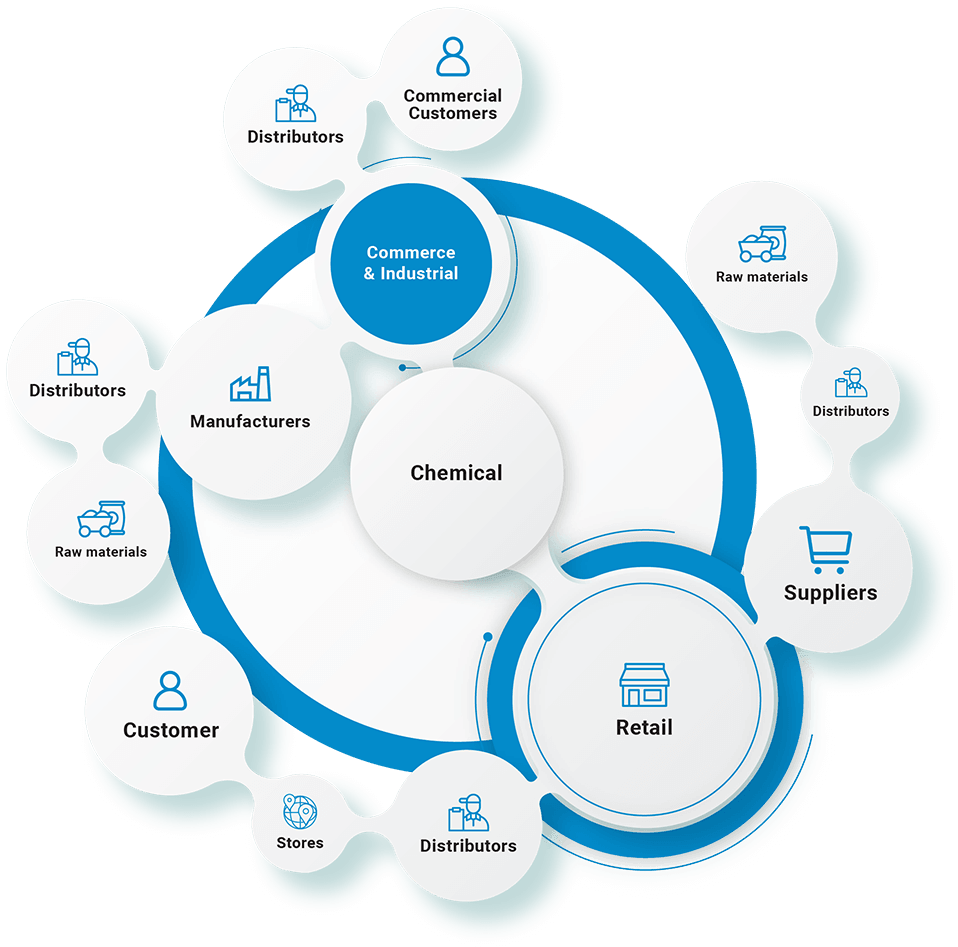
Solutions pour l'industrie chimique
Échange de données informatisé
Échangez tous les documents de négociation électroniquement, quel que soit le format ou le protocole de transmission. Enrichissez et validez les données au fur et à mesure de leur transit sur le réseau afin de résoudre les problèmes liés aux poids, aux mesures et aux autres défis d'intégration.
Web EDI
Fournir un accès sécurisé, basé sur le navigateur, aux documents de la chaîne d'approvisionnement chimique via une interface unique, améliorant la visibilité, la recherche de documents et la gestion des flux de travail tout en maintenant une archive complète et auditable pour les besoins commerciaux et réglementaires.
Comment ça marche
Aider votre chaîne d'approvisionnement chimique à prospérer
Visibilité améliorée
Offrez une visibilité accrue en donnant aux acheteurs et aux fournisseurs un accès clair aux documents transactionnels. Favorisez une collaboration plus solide entre les acheteurs et les vendeurs tout en permettant l'automatisation et des opérations de chaîne d'approvisionnement plus efficaces.
Intégration EDI
Simplifiez l'intégration EDI en gérant les connexions fournisseurs ou clients de bout en bout. Gérez les discussions techniques, le mappage, les problèmes d'intégration et les tests de bout en bout.
Flux de travail électroniques
Intégration plus facile avec les partenaires commerciaux tout en conservant des transactions numériques, en réduisant les erreurs et en améliorant la cohérence des processus dans la chaîne d'approvisionnement.