










- Home
- Electrical
Electrical Supply Chain Management
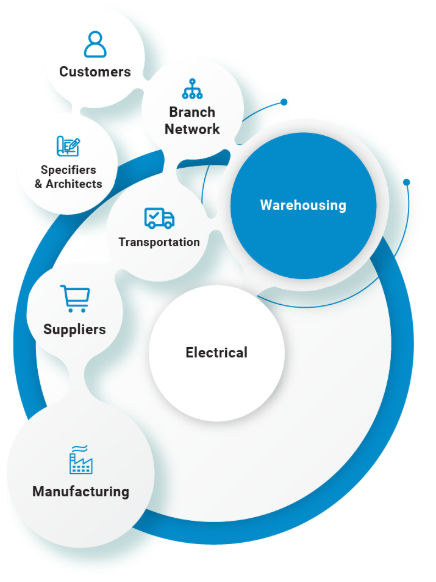
Connecting the electrical supply chain
The electrical supply chain connects manufacturers, suppliers and wholesalers through a highly integrated and fast-moving trading environment. Constant changes in industry standards, technology, product availability and customer expectations add pressure to every stage of the buying and selling process. As transaction volumes grow and processes become more complex, businesses must find more efficient, reliable ways to manage orders, invoices and data across their trading network.
- Download Series
Electrical Supply Chain Challenges
Challenge 01
Specialty Products
Electrical wholesalers often need to source products they don’t normally stock. These specialty products must be added to product files, margins calculated, and stock movements tracked, all within short timeframes. Handling these ad hoc purchases adds complexity to inventory management and order processes.
Challenge 02
Diverse Supplier Profiles
Larger electrical wholesalers often work with thousands of suppliers, trading frequently with some and only occasionally with others. Highly specialised products can mean some suppliers only exchange a handful of documents. Each wholesaler’s scale and trading patterns create unique process needs across the supply chain.
Challenge 03
Project-Specific Orders
Electrical wholesalers often supply products for new builds where specifiers and builders require specific brands that meet regulations and client preferences. These items may not be regularly stocked, requiring careful sourcing and management. Handling these project-specific orders adds complexity to inventory and order workflows.
Challenge 04
Customer Complexity
Some electrical wholesalers work with small businesses, who are juggling multiple roles as installers, administrators and accountants all in one. This means automation in this area can be limited and credit departments are reliant on manual processes to manage these accounts.
Challenge 05
Product Complexity
Many electrical products are bought in a specific way, but they may also be sold in another way. Light fittings and cables are two such product groups with potential complications. Buyers and sellers must be able to interpret and adapt to the procure-to pay processes while managing these complications.
Challenge 06
Supplier Channels
Many electrical suppliers sell through multiple channels, including retailers, not just wholesalers. This often involves supplying ‘home branded’ products, creating stock duplication and increasing the need for careful inventory and order management.
What Good Looks Like On The Ground
Customers place orders in the way that suits them.
Suppliers deliver in line with commitments.
Product availability, pricing, and delivery remain consistent across branches and projects.
Teams are not chasing information or reconciling discrepancies at the end of the day. They are focused on keeping stock moving, supporting customers, and maintaining service levels.
- Operations feel controlled.
- Service feels reliable.
- The business feels predictable.
Supply Chain Connections





















Solutions For The Electrical Industry
EDI
Provides electrical wholesalers and suppliers with a single connection point for all trading partners, standardising data exchange and eliminating manual work. It allows businesses to trade electronically with any customer or supplier, scale quickly, and avoid the bottlenecks caused by multiple formats or complex integrations.
Accounts Payable Automation
Speed up the processing of supplier invoices without compromising on quality or accuracy with automated validation, matching against purchase orders and goods receipts as well as exception handling. With manual interventions kept to a minimum, businesses are able to process more invoices in a day, even during busy periods.
Sales Order Automation
Reduce manual processing and start automating order entry and data input while delivering accurate orders and improving customer service at the same time. Bring down the possibility of having inaccuracies and mistakes to a zero and create a smooth sailing experience for customers.
Web EDI
Enable secure, browser-based access to electrical supply chain documents through a single interface, improving visibility for organisations, trading partners and branches. This approach supports document search, workflow management and self-service capabilities.
How It Works
Helping Your Electrical Supply Chain Thrive
Electrical Workflows
Support Purchase To Pay and Order To Cash processes across the electrical wholesale industry. These workflows enable wholesalers to collaborate more effectively with their branch networks and suppliers.
Network of Wholesalers and Suppliers
Ensures that suppliers are fully integrated with their customers. Wholesalers get to leverage their business from supplier integration while suppliers are able to easily trade with customers, wholesalers and retailers.
EDI Onboarding
Supports all parties in the electrical industry with quick, efficiency EDI onboarding for wholesalers and suppliers. This connects them to other trading partners and allows them to trade electronically with confidence.
Visibility
Gain greater data accuracy and visibility throughout the electrical supply chain. With receiving real-time updates, electrical buyers and seller can respond to their supply chain partners quickly and easily.